
Cloud-managed routers are heavily beneficial for businesses, especially for the ones with multiple branches. Checking the manual for setups and recovering downtime may be time-consuming for basic router tools. Luckily for managed routers, you don’t have to worry about any of that because the security and maintenance are fully outsourced, which allows your team to pay undivided attention to strategic initiatives.
What Is a Managed Router? Exploring the Benefits and Functions of Managed Routers
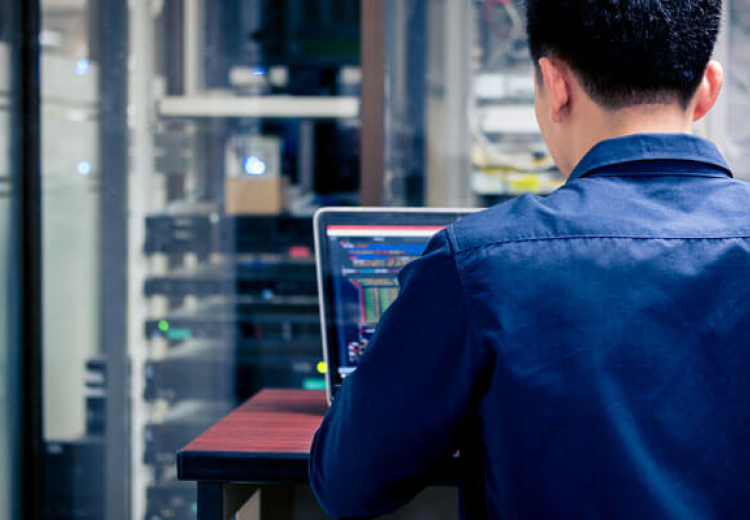
Managed routers are pre-set devices. They can provide a range of services like 24/7 support, remote monitoring, and troubleshooting. They also have a built-in firewall, ensuring you have advanced security and optimal network performance.
Sounds like the IT goblins have so much to offer you. Let’s dive a little deeper.
How Managed Routers Differ from Regular Ones
Regular routers have a smaller radius of efficiency. The range is perfect for home networks and small businesses. Anyway, outside this area, your device(s) can’t connect to it. This doesn’t work for larger organizations, especially if they are spread out over multiple locations.
Operating from various networks becomes tiresome this way. Also, imagine if there was a local issue behind network problems. Your operation may come to a halt if the issue isn’t taken care of immediately.
That’s why bigger corporations opt for cloud managed routers. They may be expensive and complicated to set up, but they help you in the long run by cutting expenses, saving your time, and providing the utmost security. Cloud-managed routers are scalable and extensible. This means users can add routers throughout the network and integrate several systems.
Benefits of Managed Routers
- 24/7 Support: A managed router can last you a lifetime. Its continuous support for your network allows you to monitor all the activities going on here anytime you want. Global customer support centers operate them, so someone is always on the lookout for any network-related issues.
- Exceptional Cost Savings: Managed routers save your pennies in multiple ways. Companies usually have to spend a lot on equipment and maintenance. But with managed routers, you don't have to worry about any of that. They also prevent operational expenditures, the thing that causes outages.
- Improved Response times: Typical DIY setups are budget-friendly, but they are very time-consuming. On the other hand, managed routers use centralized operation. Which means you can have automated monitoring systems. All of this helps improve response time.
- Seamless Scalability: Managed routers make sure that you have seamless operations thanks to their prompt assistance. By providing reliable access to private or public IP addresses, these babies optimize network responsiveness.
- Automatic Updates and Upgrades: This is a key feature of cloud-managed routers. Timely delivery of security and firmware updates increases web-based utility. This operation usually takes place during off-peak hours to minimize disruption.
- Disaster Recovery: Managed routers streamline operations, and that reduces OPEX. The reliable infrastructure that they provide helps companies to effectively manage unwanted issues.
- Business Agility: All of the points mentioned above increase business Agility and flexibility. Backup workflows are always there if a network issue comes up. This way, the staff can focus more on their work and less on troubleshooting.
Functions of Managed Routers
- Network Address Translation: Cloud routers perform NAT by creating NAT gateways. This allows the devices already present in the system to connect with resources outside the VPC network. It basically translates the source IP address of a packet as it exits a network.
- VPN Support: Managed routers are capable of site-to-site VPN connection. Making it very easy to connect with different branch locations, remote centers, and on-premises users.
- DHCP Server: DHCP servers assign IP addresses to devices connected to the network.
- WAN Acceleration Services: This feature transfers data across WANs. Moving massive amounts of data over long distances is made haggle-free through data catching, compression, and bandwidth management.
- Network Traffic Management: In today's distributed and cloud-connected environment, data traffic is an inevitable phenomenon. Managed routers analyze and shape traffic to identify and solve network issues.
- Remote Monitoring: A lot of cloud router solutions offer real-time monitoring advantages. This way, users can check on the updates and manage devices and firmware from a distance.
- Routing Management: Cloud routers work as the control plane for different types of cloud services. They can also adapt to changing network conditions. These machines provide fully distributed and managed services, which ensures successful route management.
Factors to Consider While Choosing Managed Router Providers
Before buying a managed router, you need to take a few things into account. Consider the following:
Features: According to your business requirements, the providers should offer you a variety of features like firewalls, VPN support, and remote management tools.
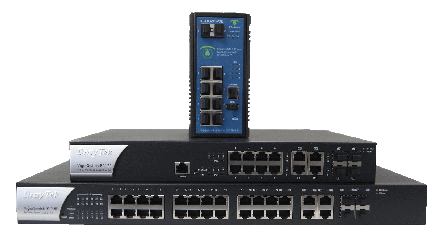
Customization: Match the router’s capabilities with your needs. Look at your network before choosing a router for your business. You can go for different types of connectivity methods to make a stronger network. For example, T2 and T3 connections or Gigabit Ethernet Copper. You can modify different elements of the router with modular designs. They make upgrades easier and scale the edge of your network. Modular designs make it very easy to swap CPUs, ports, memory, and more.
Performance: Managed routers simplify network connectivity. They are also very easy to expand on. The scalable solutions that they provide can stretch fiber-based networks up to 100gbps. This is how you get full router support.
Cost: Cloud-managed routers are initially pricey, but in the long run, they can save you a lot of money. Basic routers are vulnerable to malware and disruption. So they need a lot of maintenance. And if you sum up all the maintenance fees, you’ll be able to see why you’d be more benefited from managed routers.
Security: Since there are supervisors watching your network all the time, you don’t need to worry about downtime. And the built-in firewall wards off all the malware. This makes your network all the more flexible and ready to take on any core projects without intervention.
FAQ:
How does a router manage network traffic?
You’d be amazed at how these routers direct data packets to their intended destinations. Configuration modes like NAT, DHCP server, and WAN acceleration services are excellent at determining the best paths for data to travel. Additionally, they identify bandwidth usage and security threats so that the data doesn’t get stuck in the way. This monitoring can be done directly through the router using monitoring tools.
Is 192.168.1.1 the default IP address?
No, 192.168.1.1 isn’t always the gateway. While many users of home routers use this as the default IP, some routers may use different gateways like 192.168.0.1, 192.168.2.1, 10.0.1.1, 10.1.1.1, etc. Keep in mind that in order to connect to the 192.168.1.1 IP address via WiFi is not possible. You’d need an ethernet cable for that. You can opt for several other IP addresses if the default one doesn’t work. Although specific steps may differ, just remember to read the manual and look up the instructions.
etur adipiscing elit. Ut elit tellus, luctus nec ullamcorper mattis, pulvinar dapibus leo.
Comments are closed